
Office Gate Design That Doesn't Create Morning Chaos
TL;DR
A gate that's too slow at 8 am doesn't just make people late. It teaches them to tailgate, prop the door, and share badges, because the workaround is faster than the rule. Fix the three things that actually cause the backup, and none of that pressure builds up in the first place.
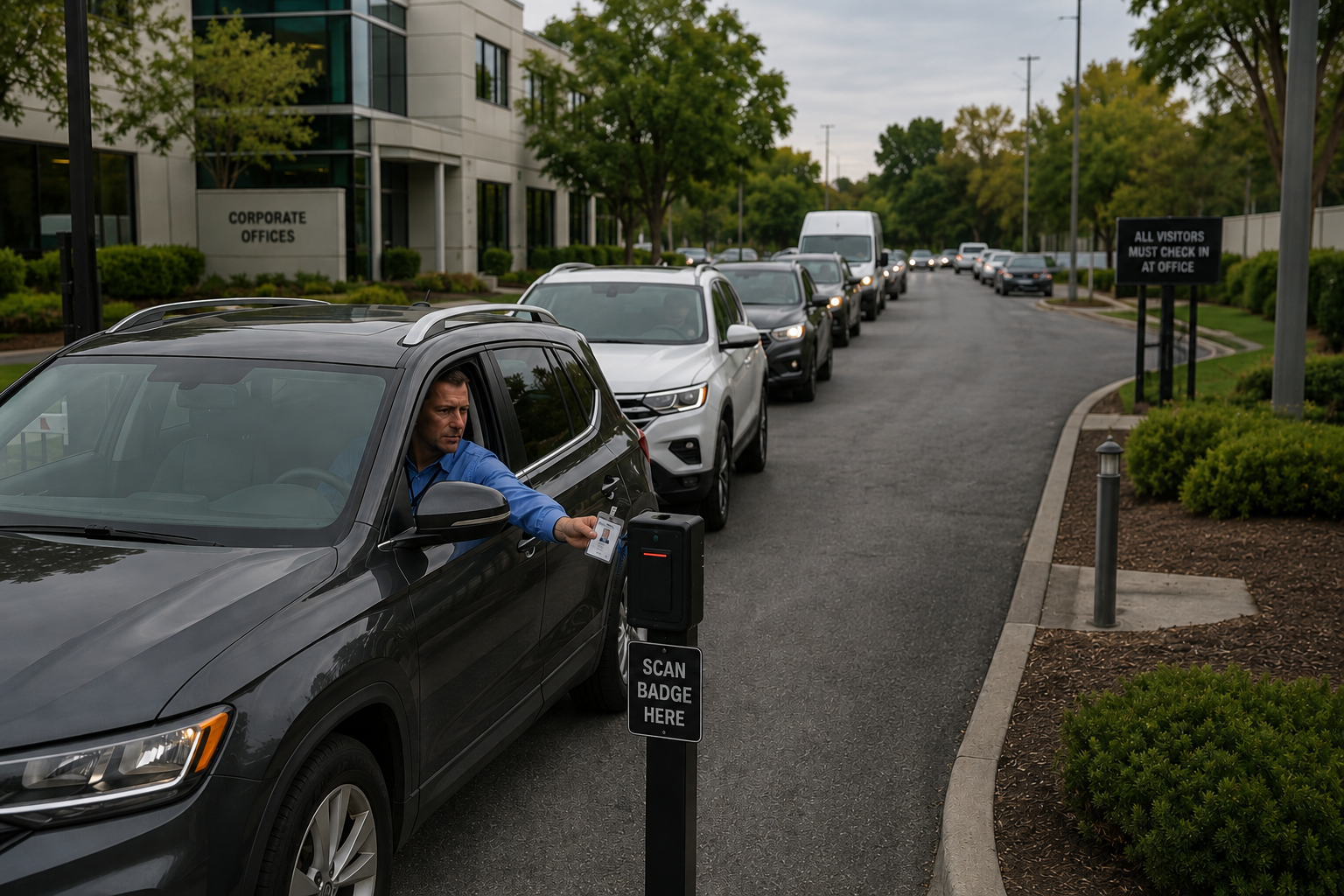
Why Does Peak-Hour Queueing Lead to Tailgating?
Queueing failures compound. If your gate can process one entry every 12 seconds and 200 people arrive between 8:00 and 8:15, you've got a line that's still moving at 8:40. Nobody budgets 40 minutes to get into their own office.
Once people are stuck in that line, tailgating stops feeling like a violation and starts feeling like common sense. The person ahead of them already opened the gate. Following them through costs nothing and saves five minutes. ASIS International's guidance on access control design points to exactly this pattern: throughput capacity has to match arrival volume, not average volume, or the system trains people to bypass it during the exact hours it matters most.
Design fix: Model your actual peak, not your daily average. If 60% of your building's traffic arrives in a 20-minute window, size the gate for that window. That might mean a second lane, a faster credential type for high-volume hours, or staggered arrival incentives instead of more hardware.
Why Does Reader Placement Cause Propped Doors?
Reader placement is one of those details nobody notices until it's wrong. Put a badge reader too close to the door, and people bunch up waiting to swipe, then hold the door for the next three people instead of letting it close and lock. Put it too far, and drivers can't reach it from the car without opening the door, so they hold it open at the gate arm too.
The fix isn't more signage telling people not to prop doors. It's giving them a physical setup where propping the door is slower than just badging in.
Design fix: Place vehicle readers where a driver can reach them without unbuckling, typically 24 to 30 inches from the drive lane and at a height that works for both sedans and larger vehicles. For pedestrian gates, put the reader far enough from the door that one person clears the threshold before the next one swipes, breaking the bunch-up that leads to propping.
Why Does Dwell Time Push People Toward Badge-Sharing?
Dwell time is the seconds between presenting a credential and the gate actually opening. Four seconds feels instant. Eleven seconds, multiplied by 150 people, adds up to a line that people start solving on their own, usually by sharing one badge among several people so only one person has to wait through the read cycle.
That's not a theoretical risk. It's an audit trail with someone else's name on it and someone else's access on the record. NFPA's life safety code discussions around egress and access timing make the same underlying point for the reverse direction: when a system takes too long, people find a faster way around it, and that faster way is usually less safe.
Design fix: Test your actual dwell time under load, not in a demo. If it's over 5 to 6 seconds per entry, look at the credential type before you look at the hardware. Long-range RFID and mobile credentials typically clear faster than proximity cards that require a slow, deliberate tap.
Where This Leaves Your Gate Design
Every one of these fixes comes back to the same idea. People don't bypass security because they're bad actors. They bypass it because the design made bypassing faster than complying.
- Match your gate's capacity to your real peak
- Place readers where people can actually reach them without bunching up
- Cut dwell time until waiting is no longer worth the workaround
Want a walkthrough of what your morning peak actually looks like against your current gate capacity? An assessment of your gate system will show you exactly where the backup starts and what it would take to fix it. Schedule a gate assessment today!