
Why Tailgating Is the #1 Security Failure in Office Properties
Office buildings invest heavily in locks, access control systems, cameras, mobile credentials, keypads, and commercial security gates. But one of the biggest security risks does not usually come from broken equipment.
It comes from people being polite.
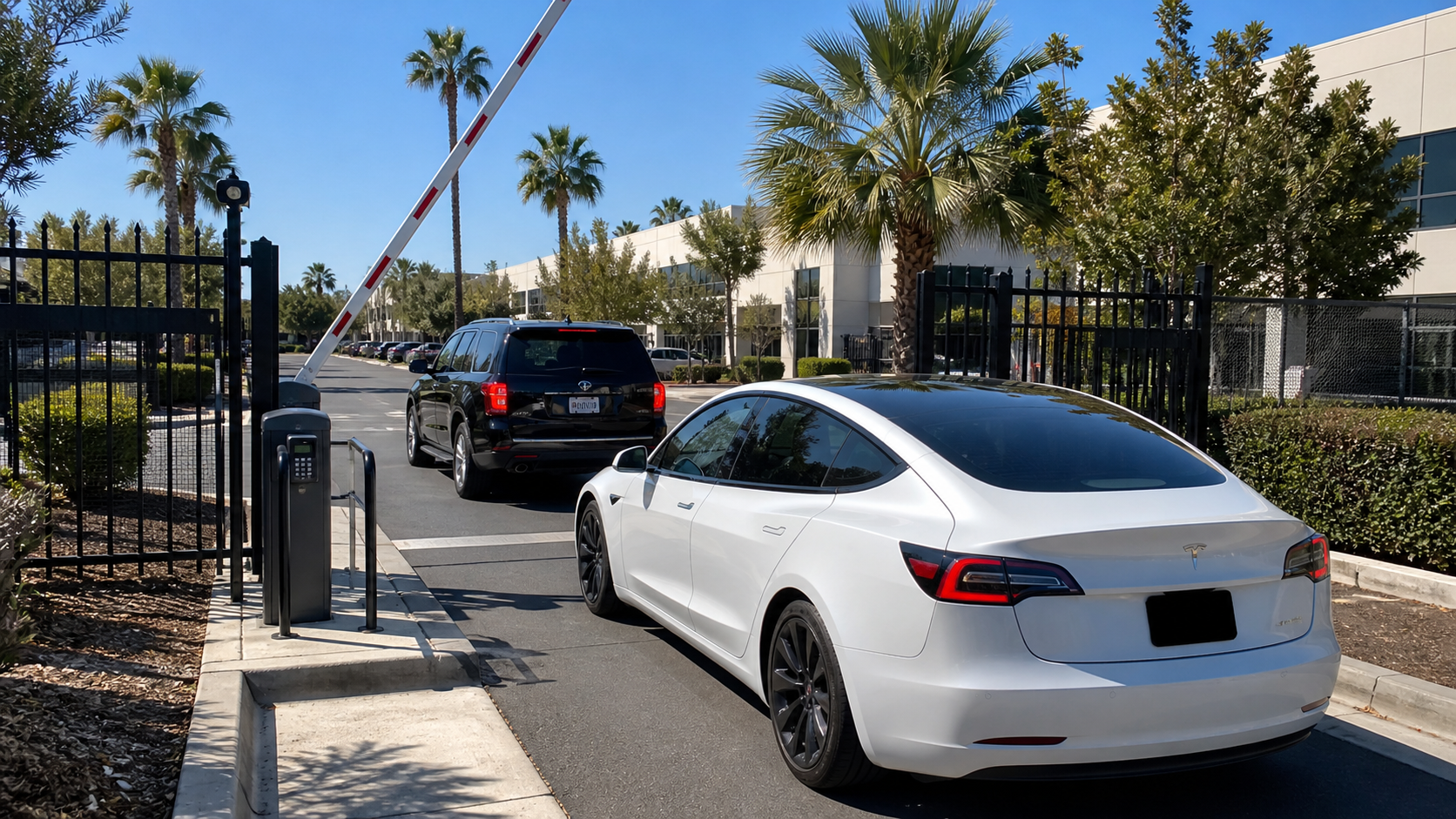
Tailgating happens when an unauthorized person follows an authorized person through a secured entry point. It may happen at a lobby door, parking garage gate, employee entrance, elevator access point, or fenced commercial perimeter.
And in office properties, it is often the easiest way around even the best security hardware.
The core problem is simple: culture and convenience defeat hardware every time.
What Makes Tailgating So Common?
Most employees are not trying to create a security problem. They are trying to be helpful, efficient, or avoid an awkward interaction.
- Someone holds the door for a person carrying coffee.
- A tenant lets a visitor follow them through the gate.
- An employee assumes the person behind them “probably works here.”
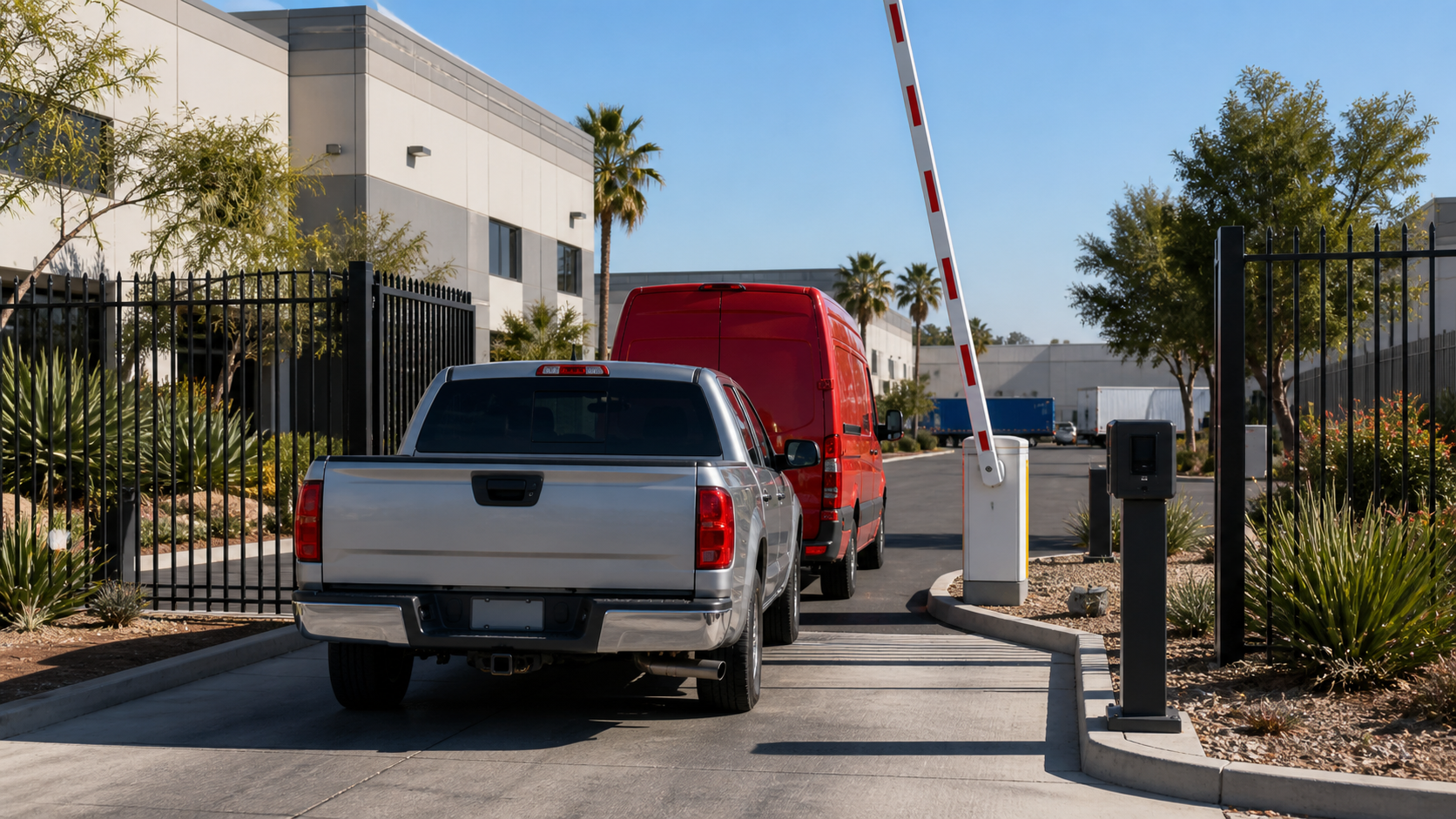
- A delivery driver slips in behind a car entering the parking area.
This is what makes tailgating so dangerous. It often looks normal.
Unlike forced entry, tailgating does not require damage, tools, or obvious suspicious behavior. It takes advantage of habits that are already built into everyday office culture.
Polite Abuse: When Courtesy Becomes a Security Gap
In most workplaces, holding the door open is considered good manners. In a secure office property, that same courtesy can become a liability.
This is sometimes called polite abuse: using someone’s natural politeness to bypass access control.
The person tailgating may appear confident, distracted, rushed, or familiar. They may be on the phone, carrying a package, wearing business casual clothing, or walking in step with a group. That makes employees less likely to question them.
The challenge is not just technical. It is cultural.
Strong tailgating prevention requires employees, tenants, vendors, and security teams to understand that access control only works when every person uses their own credentials.
Statistic: Nearly 60% of employees have witnessed tailgating.
Shared Codes Create Shared Risk
Keypads are common in commercial properties, but shared codes can quickly weaken the entire system.
A gate code may be given to employees, vendors, cleaners, contractors, delivery drivers, and temporary visitors. Over time, that code can spread far beyond the people who were supposed to have it.
The more widely a code is shared, the less useful it becomes as a security tool.
Shared codes create several problems:
- They make it difficult to know who entered.
- They are easy to pass along.
- They are often not changed frequently enough.
- They allow former employees or vendors to retain access.
- They reduce accountability across the property.
For office properties using commercial security gates, individual credentials are usually stronger than shared codes. When each person has their own access method, property managers can track entry activity, remove access when needed, and reduce unauthorized use.
Mobile Credentials Help, But They Do Not Solve Everything
Mobile credentials can improve access control by replacing physical keys, cards, or shared PINs with smartphone-based entry. They are convenient, easier to manage, and often more secure than traditional methods.
But they do not eliminate tailgating.
An employee can still open a door or gate with a mobile credential and allow someone else to follow behind. A vehicle can still slip through a gate before it closes. A visitor can still enter with a group if no one is paying attention.
That is why property managers should not treat mobile credentials as a complete security solution. They are a tool, not a culture shift.
Effective tailgating prevention combines better technology with better behavior.
Commercial Security Gates Are Only as Strong as the Rules Around Them
Commercial gates are an important first layer of protection for office properties, especially parking lots, employee areas, loading zones, and restricted building entrances.
However, even well-designed commercial security gates can fail if access policies are loose.
Common weak points include:
- Gates that stay open too long
- Drivers following too closely behind authorized vehicles
- Employees sharing gate codes with visitors
- Lack of signage explaining access rules
- No consequences for repeated violations
- Poor coordination between property management and tenants
Gate systems should be designed and managed with tailgating in mind. That may include faster close times, anti-tailgating sensors, license plate recognition, video verification, guard oversight, or separate visitor entry procedures.
The goal is not just to install a barrier. The goal is to control access consistently.
Enforcement Is Where Most Properties Fall Short
Many office properties have access control policies, but fewer enforce them consistently.
That is where security starts to break down.
Employees may know they are not supposed to let others follow them inside, but they may not feel comfortable stopping someone. Tenants may understand the rules but ignore them during busy hours. Vendors may use old codes because no one has removed them.
Without enforcement, security policies become suggestions.
Property managers should make expectations clear:
- Every person must use their own credential.
- Visitors must check in through the approved process.
- Gate codes should not be shared.
- Suspicious access behavior should be reported.
- Repeated violations should have consequences.
This does not mean creating a hostile office environment. It means creating a culture where security is normal, expected, and supported.
How to Improve Tailgating Prevention
The best approach combines people, process, and hardware.
Start with communication. Tenants and employees need to understand why tailgating matters. Explain that the issue is not about being rude. It is about protecting people, property, vehicles, equipment, and business operations.
Next, tighten access control. Replace shared codes where possible. Use individual credentials. Remove inactive users. Review access logs. Update permissions regularly.
Then evaluate the physical entry points. Doors, gates, parking entrances, and lobby areas should be reviewed for tailgating risk. In some cases, upgrading commercial security gates or adding anti-tailgating features may be necessary.
Finally, support enforcement. Employees should not feel like they are personally responsible for confronting strangers without backup. Give them simple reporting steps and make sure security teams or property managers respond consistently.
The Real Lesson: Hardware Cannot Fix a Culture Problem
Tailgating is the #1 security failure in office properties because it bypasses the systems owners already paid for.
- A gate cannot stop someone if an authorized driver waves them through.
- A mobile credential cannot protect a building if employees hold the door open for strangers.
- A keypad cannot secure a property if the code is shared across vendors, tenants, and former staff.
Security hardware matters. But culture matters more.
For office properties, the strongest security strategy is one where technology and behavior work together. That means better access control, smarter commercial security gates, clear policies, and a workplace culture that takes tailgating prevention seriously.
Statistic: 78% of respondents said they take an active stance on tailgating after something happens within the company.
Secure the Gate. Strengthen the Culture.
Tailgating prevention is not about making people less friendly. It is about making access control more reliable.
For office buildings, business parks, and commercial properties across the San Diego metro area and San Diego County, the right gate system can make a major difference, but only when it is paired with clear rules and consistent enforcement.
Ready to improve your office property’s access control? Contact our team today to discuss commercial security gate solutions designed to reduce tailgating and strengthen your property’s first line of defense.